
CMIL operates through Regional Labs that anchor risk intelligence and adaptation finance in local contexts, each with its own co-creation network, innovation committee, and operational hub.
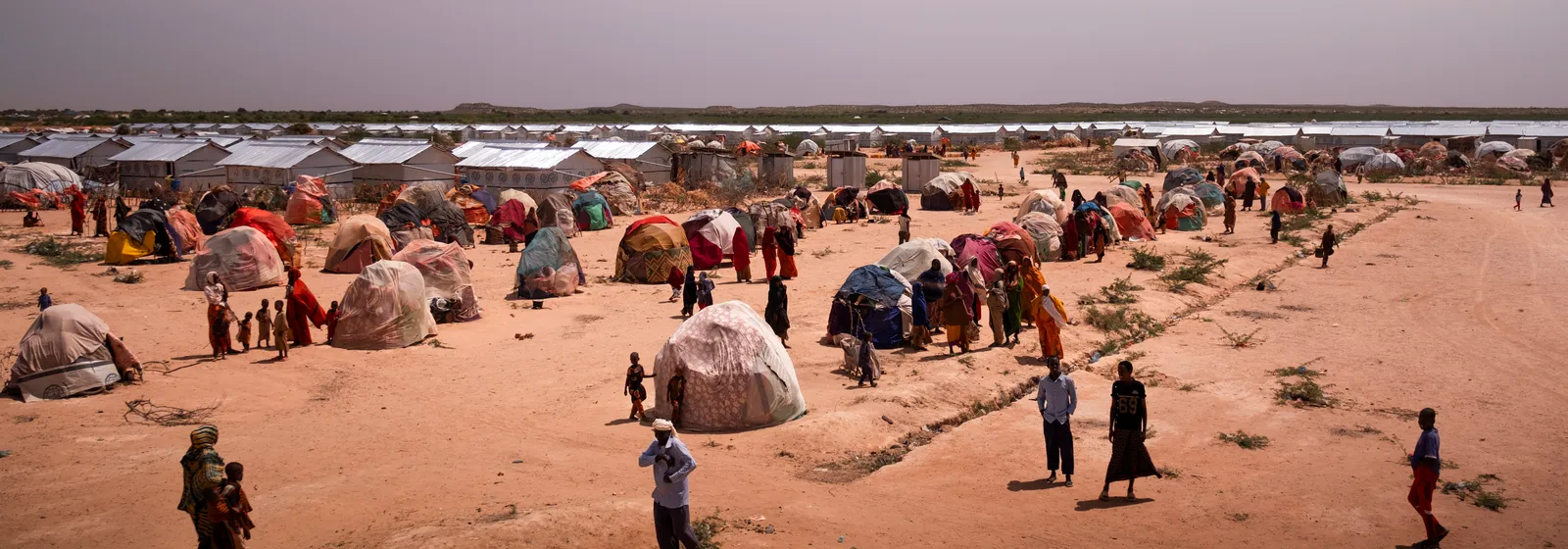
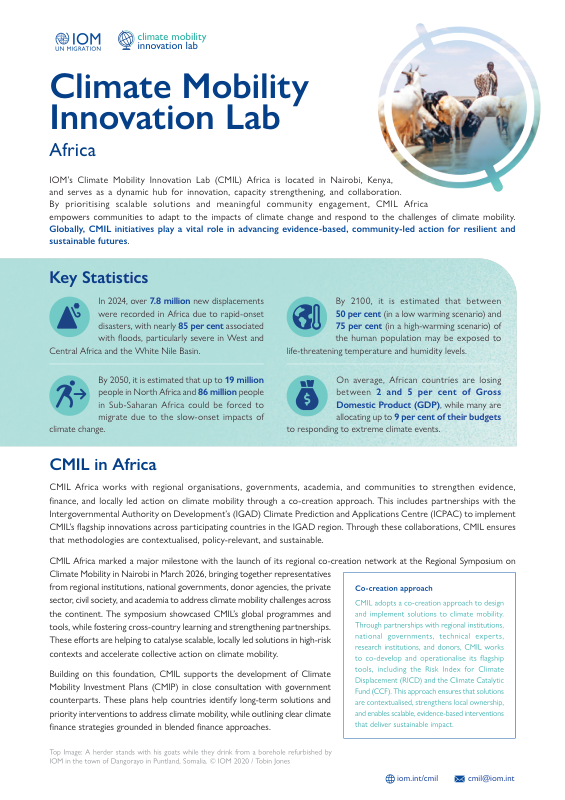
CMIL Africa, headquartered in Nairobi, Kenya, extends the Lab's model to a continent facing some of the world's most severe climate mobility pressures, from recurrent drought in the Sahel and the Horn of Africa to flooding and displacement across East and Central Africa. Working through a co-creation approach with regional organisations, governments, academia, and communities, the Lab is rolling out its risk intelligence tools across five countries and deploying the Climate Catalytic Fund in three, supported by national technical working groups that anchor the work in government systems and priorities. Building on the model first proven in Asia-Pacific, CMIL Africa is positioned to scale evidence-based anticipatory action and adaptation finance across the region.
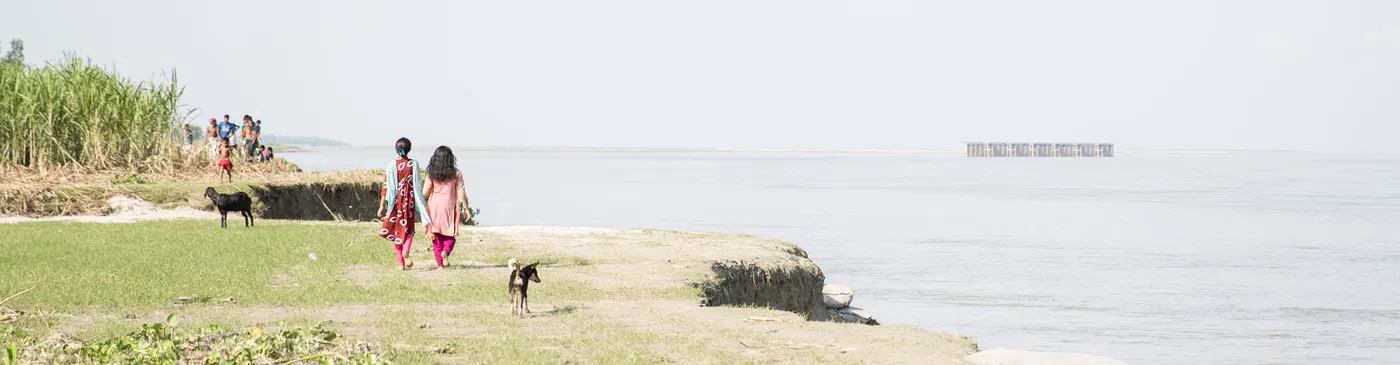
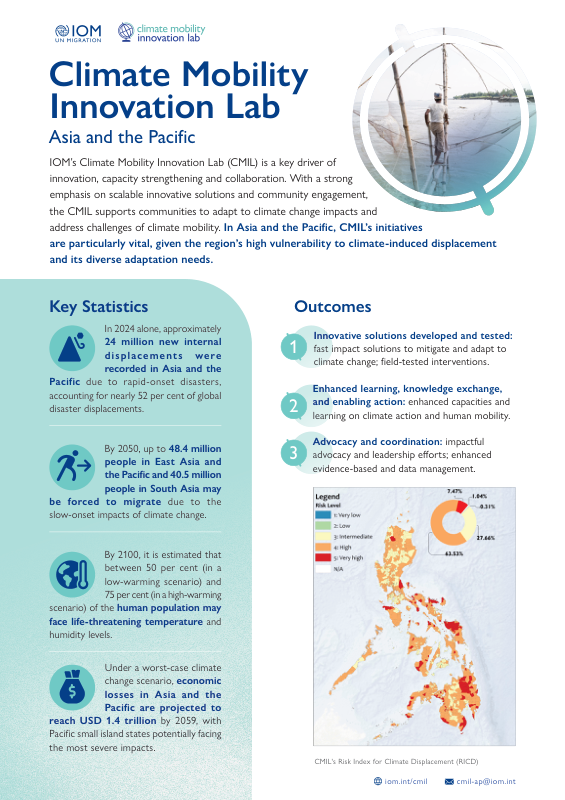
The Climate Mobility Innovation Lab for Asia and the Pacific is IOM's founding regional lab, established to design and scale the innovative tools now anchoring CMIL's global model. Headquartered in Bangkok, Thailand, with a sub-regional presence in Suva, Fiji, the Lab addresses the region's acute exposure to both rapid-onset disasters, such as cyclones and flooding, and slow-onset climate change impacts, including sea-level rise, that are driving displacement across South, East, and Southeast Asia and the Pacific. Since its launch, the Lab's tools have become operational in five countries, with further expansion underway, delivered through a co-creation network of partners spanning national governments, research institutions, and universities across the region.
 Department of Social Welfare and Development, Philippines
 Climate Change Commission, Philippines
 National Agency for Disaster Management, Indonesia
 Ministry of Environment and Climate Change, Fiji
 Ministry of Climate Change, VanuatuDCCEDepartment of Climate Change and Environment, Thailand
_Indonesia_1TkxVK.svg) BPS-Statistics, Indonesia
BPS-Statistics, Indonesia Department of Environment and Natural Resources, Philippines
_Philippines.svg_1TkxVK.webp) Office of Civil Defense, Philippines
Office of Civil Defense, Philippines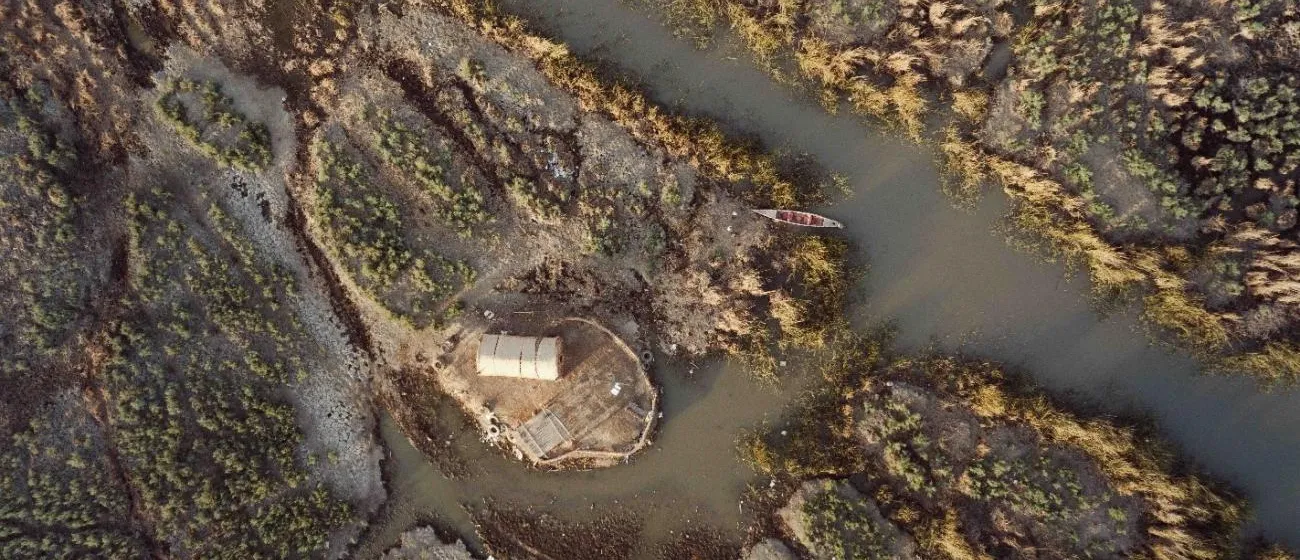
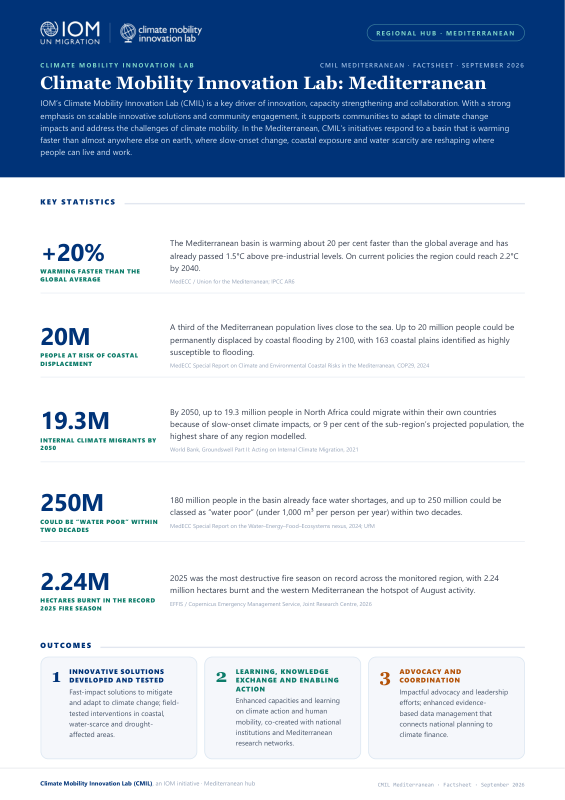
CMIL's Mediterranean Regional Lab is in early development, based in Rome, Italy, extending the Lab's approach to a region where climate mobility is shaped by water scarcity, desertification, land degradation, and complex cross-border dynamics linking Southern Europe, North Africa, and the Middle East. Building on the tools and methods proven in Asia-Pacific and Africa, the Lab is establishing its regional innovation committee, co-creation network, and operational hub, with the CIMA Research Foundation as founding technical partner and support from Italy's MASE through Piano Mattei. Its focus is on adapting risk intelligence and adaptation finance to contexts where slow-onset impacts intersect with long-standing migration routes.
Committee members to be announced.