

15 July 2026
South Sudan Launches National RICD and CCF Workshop
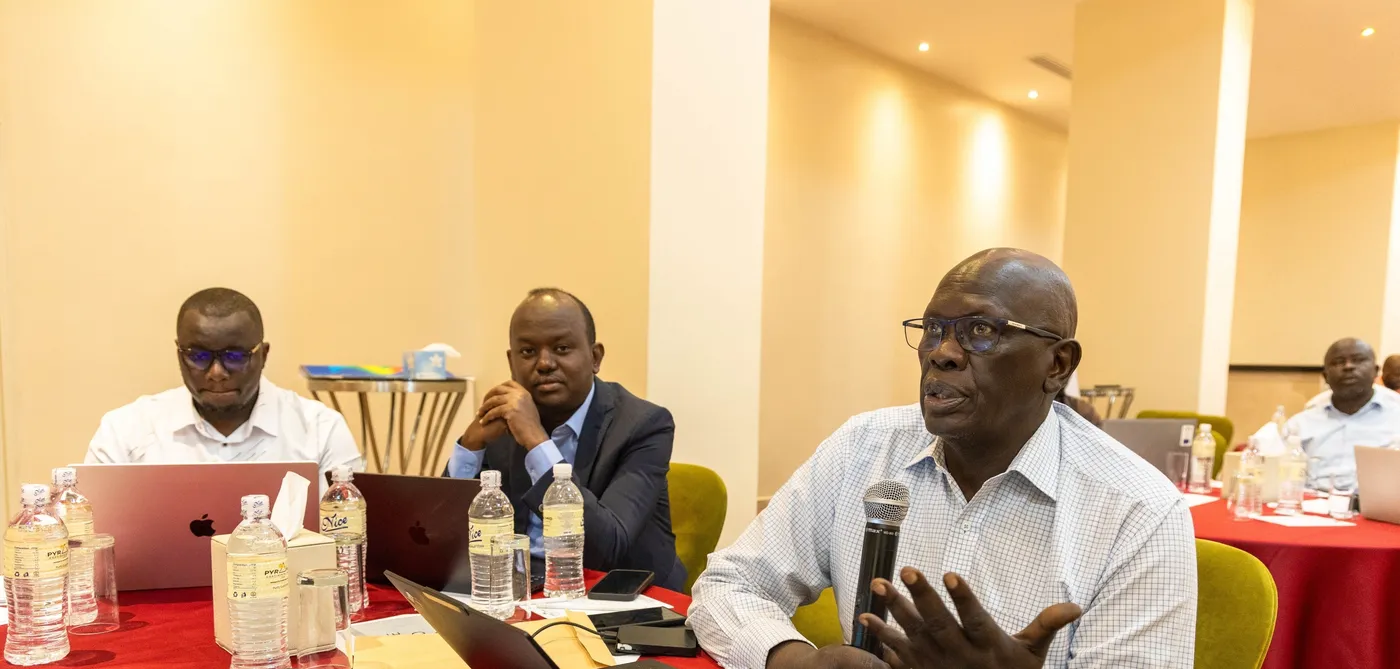
On 14-15 July 2026, government representatives, humanitarian partners, researchers, civil society, and development organizations gathered in Juba for South Sudan's National Workshop on Climate Mobility, convened by the Ministry of Humanitarian Affairs and Disaster Management (MoHADM), IOM, and CMIL Africa, with technical support from CIMA Research Foundation and ICPAC.
The workshop marked the launch of South Sudan's national co-creation process for the Risk Index for Climate Displacement (RICD), an innovative framework designed to identify areas at risk of climate-induced displacement and support anticipatory action before crises occur.
Over two days, participants reviewed the key drivers of displacement in South Sudan, including flooding, drought, food insecurity, loss of livelihoods, disease outbreaks, inflation, and conflict. Stakeholders also mapped available datasets and institutions contributing to climate-displacement analysis, while identifying critical data gaps and opportunities to strengthen coordination and data sharing for both macro-level risk mapping and micro-level community assessments.
Discussions explored how RICD can be applied at national scale to identify displacement hotspots and at local level to better understand household vulnerabilities, coping capacities, and the tipping points that may trigger displacement. Participants further examined the Climate Catalytic Fund (CCF), which aims to support locally led resilience and adaptation initiatives in RICD-identified hotspots, helping communities reduce displacement risks before they escalate into crises.
The workshop concluded with agreement on a national roadmap to develop initial climate-displacement risk maps, mobilize additional datasets, strengthen institutional collaboration, and advance field-based assessments. The event also received visibility through IOM South Sudan social media coverage, helping raise awareness of the initiative and its importance for anticipatory action and climate resilience.
By bringing together government institutions, technical experts, academia, and development partners, South Sudan has taken an important step toward a more proactive, evidence-based, and action-oriented approach to addressing climate mobility and displacement risks.
X Tweets