


5 November 2026
CMIL at the Stockholm Forum on Peace and Development 2026
Stockholm, Sweden.
Across Africa, Asia and the Pacific, climate shocks, conflict and economic pressures increasingly compound one another. Yet the tools to identify where climate displacement is most likely remain limited, constraining both finance and durable solutions for internally displaced persons (IDPs).
On 4 November 2026, IOM's Climate Mobility Innovation Lab (CMIL) co-organised a side event with the Nordic Africa Institute (NAI), the Swedish International Development Cooperation Agency (Sida) and the United Nations Development Programme (UNDP) at the Stockholm Forum on Peace and Development, held under the theme "From Rupture to Repair: New Visions for Peace and Development". The session, From Evidence to Action, explored how risk data can be turned into solutions in fragile and conflict-affected settings.
Sida presented its approach to durable solutions through a humanitarian–development–peace nexus, while NAI and UNDP shared their policy brief on displacement in times of polycrisis. CMIL introduced the Risk Index for Climate Displacement (RICD), now being rolled out in 15 countries across Africa and Asia-Pacific, and its upcoming conflict layer, which will be piloted in Cotabato in the Philippines and in Somalia.
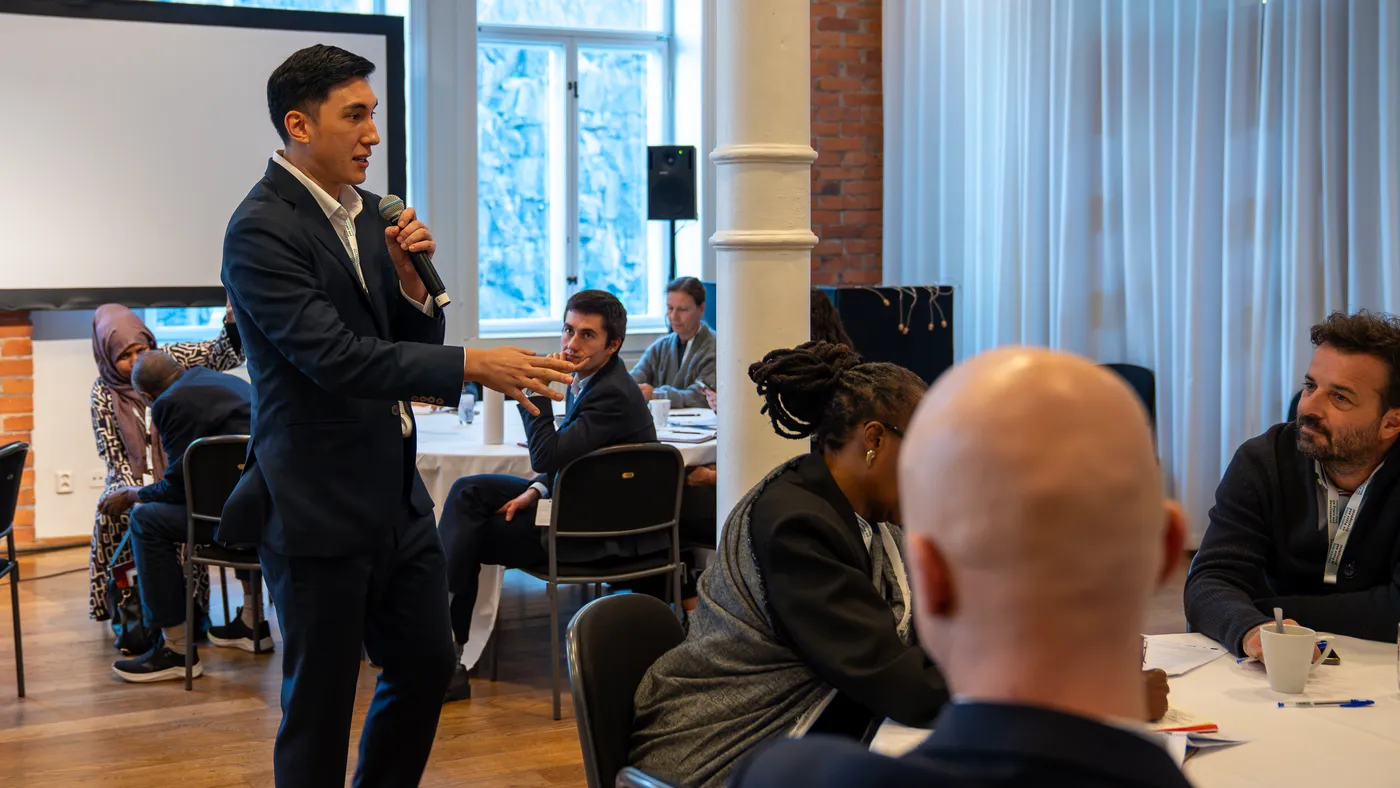
Participants first explored the RICD's live risk map for the Philippines, discussing how risk is calculated and what the data does not yet capture, especially to measure and analyse climate displacement risk in conflict affected countries.
Turning to Somalia, groups identified conflict data that could realistically be tracked over time, such as violent incidents, conflict-related displacement, forced evictions and humanitarian access, and existing sources including ACLED, the UNHCR-led Protection and Return Monitoring Network and IOM's Displacement Tracking Matrix. They stressed that communities must own the data, and that local action needs a clear pathway to larger-scale financing.
The groups also found that the main barrier is less a lack of data than fragmented knowledge, differing institutional mandates and limited capacity to act on evidence together. They called for building on existing frameworks and systems rather than creating parallel ones, including by strengthening national statistics offices and aligning the RICD with their data. In settings such as Somalia, where state capacity is limited and many actors are involved, the RICD will add most value if local, national and international actors share data and coordinate across the humanitarian–development–peace nexus, with accountability to communities and a duty of care for those collecting sensitive data.
Closing the session, Dr Abdalla Sahid Abdi, Deputy Director-General of Somalia's National Centre for Rural Development and Durable Solutions, highlighted the national plan to achieve durable solutions for 1 million IDPs by 2029. He called for shared evidence, aligned public, development, climate and private finance, and greater investment in rural areas of origin.
The insights will inform the development of the RICD's conflict layer as CMIL works with partners to move from risk evidence to action. Explore the data at cmil.iom.int/ricd.