

24 September 2026
Chad Launches Climate Mobility Investment Plan and National RICD Workshop
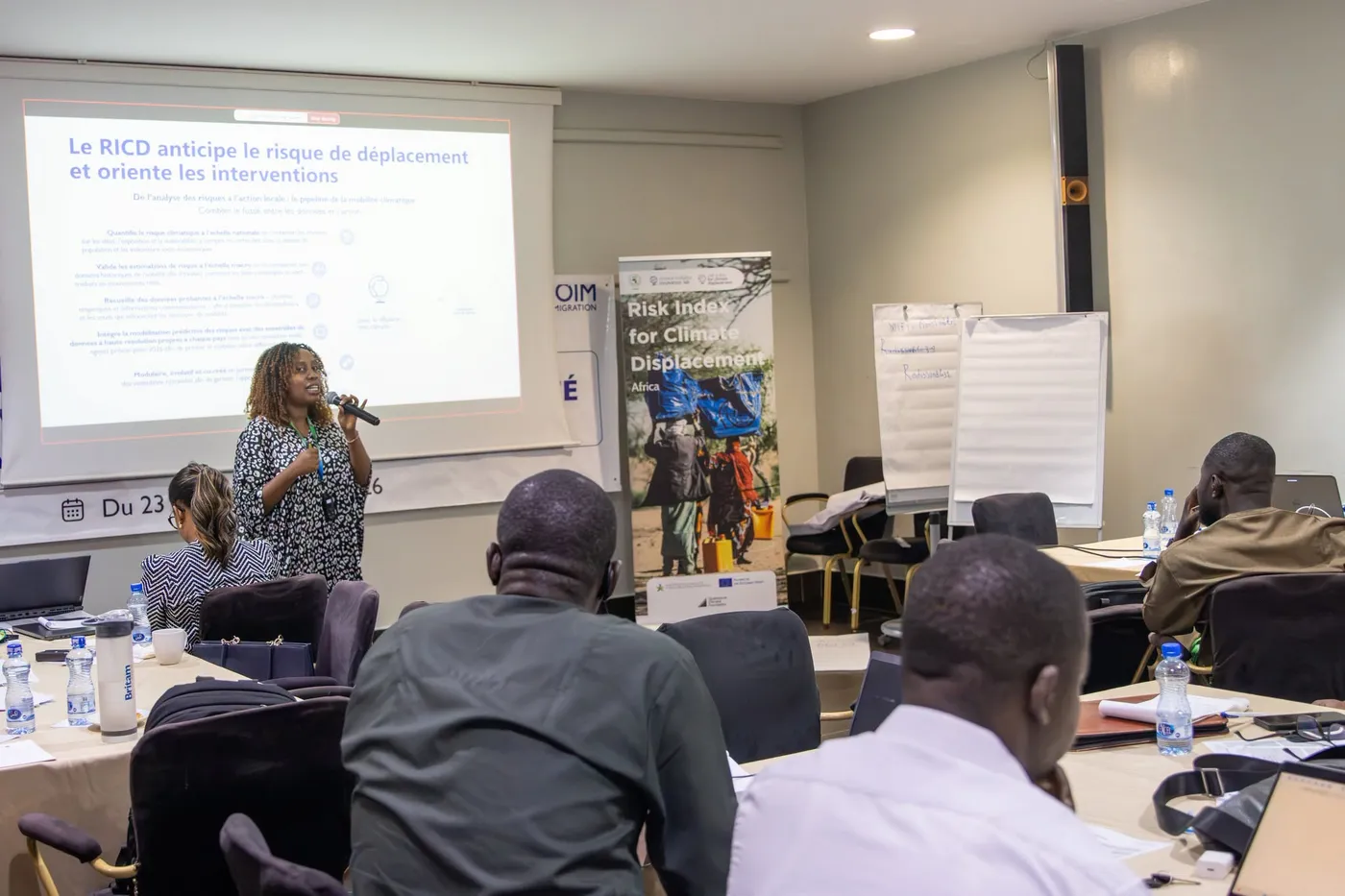
As floods, drought and erratic rainfall continue to uproot communities across Chad, national institutions are working to anticipate climate displacement before it happens. On 23-24 September 2026, the Ministry of Environment, Fisheries and Sustainable Development, in collaboration with IOM Chad and CMIL, convened a national workshop in N'Djamena to launch the Climate Mobility Investment Plan (CMIP) and begin co-creating Chad's Risk Index for Climate Displacement (RICD). The workshop brought together members of the National Technical Committee on Climate Change (COTNACC), government institutions, technical experts and partners around a shared vision for climate resilience and prevention.
The urgency is clear. The 2024 floods caused more than 1.3 million internal displacements, the highest figure ever recorded in Chad and more than the previous fifteen years combined. Around 2 million people remain in forced displacement today, many affected by both conflict and climate hazards. The CMIP supports the developed and validated National Adaptation Plan, the Nationally Determined Contribution (NDC 3.0), and the national climate change strategy. It aims to direct investment towards climate-resilient livelihoods, natural resource management, disaster risk reduction and early warning systems.
Supported by IOM Chad, IOM's Climate Mobility Innovation Lab (CMIL) Africa and CIMA Research Foundation, the first day presented IOM's technical assistance package. Its five components are data and analysis, climate mobility needs assessment, capacity strengthening, an investment pipeline and financing landscape mapping. Participants also discussed how stakeholders will coordinate, co-create and validate results, including through a proposed climate mobility working group.
The second day turned to the RICD, a tool designed to identify the areas most at risk of climate-induced displacement. Through guided group work, participants identified and began weighing the factors that drive people to move, mapped available datasets and sources, and reviewed gaps in data quality, disaggregation and access. Flood indicators such as extent, frequency and spread, and drought indicators such as water and food insecurity, malnutrition and market prices, were among those discussed. Participants also stressed the importance of vulnerability and adaptive capacity measures, including access to water, health care, roads, early warning systems and social protection. This reflects the nature of each hazard: floods are rapid-onset, so their impacts can be assessed readily using a physical approach, whereas drought is slow-onset and affects movement through livelihoods, food security and household coping capacity, which humanitarian and socio-economic data capture better than rainfall alone.
The workshop reflects a growing shift in Chad's climate agenda, from responding to displacement after it happens to investing in solutions beforehand. As climate risks intensify across the Sahel, the CMIP and the RICD offer a practical pathway for turning climate risk information into action, helping communities adapt and strengthen resilience before humanitarian crises emerge.
In his closing remarks, the Deputy Director General of the Environment welcomed the quality of discussions on institutional arrangements and the co-creation of the RICD, and thanked IOM and partners. By shifting from after-the-fact response to upfront investment, Chad is building a practical pathway to turn climate risk information into action and strengthen community resilience before humanitarian crises emerge.
Facebook Posts
· https://www.facebook.com/share/p/1HJYH76axi/?mibextid=wwXIfr