
CMIL views nature-based solutions (NbS) through a climate mobility lens, examining how ecosystem restoration builds resilience and reduces displacement risk, and identifies innovative financing to scale them across the region.

CMIL approaches nature-based solutions (NbS) through a climate mobility lens, examining how ecosystem restoration can strengthen community resilience and reduce displacement risk. This includes a conceptual framework that maps how NbS interact with the environmental, social, and economic drivers of climate mobility, and how they can contribute to positive outcomes for at-risk communities.
CMIL has also begun developing landscape-scale NbS pipelines across ten countries in Asia and the Pacific, identifying priority landscapes, relevant interventions, and suitable financing models, in collaboration with governments and local stakeholders. This work sits alongside the CCF, aiming to develop pipelines that generate additional funding for climate mobility solutions and channel it to hotspot locations.
CMIL will also develop ex-ante metrics, using NatCap methodologies, to estimate resilience gains and potential avoided displacement, making these NbS projects legible and fundable for climate finance actors.
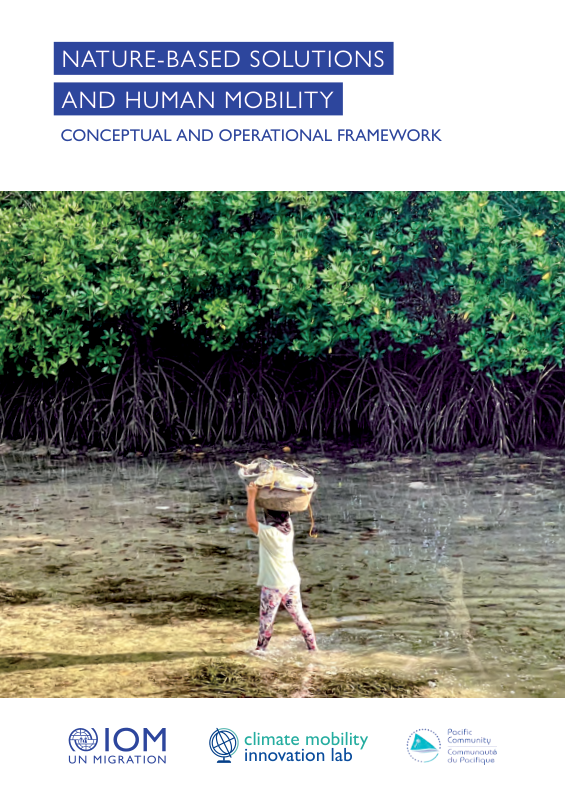
Documents the links between climate change and human mobility, and operationalises NbS as an approach to strengthening resilience for communities affected by climate displacement.
A ten-country pipeline that identifies potential landscapes of interest for climate mobility and outlines which NbS interventions may be implemented, how they can help address mobility challenges, and what financing models are suitable, given the contextual and geographical specificities of each.
Ex-ante metrics to estimate resilience gains and potential avoided displacement using NatCap methodologies, making NbS outcomes legible to climate finance.